Electric vs Charcoal Incense Burners: Which One Should You Choose?

2024-11-04
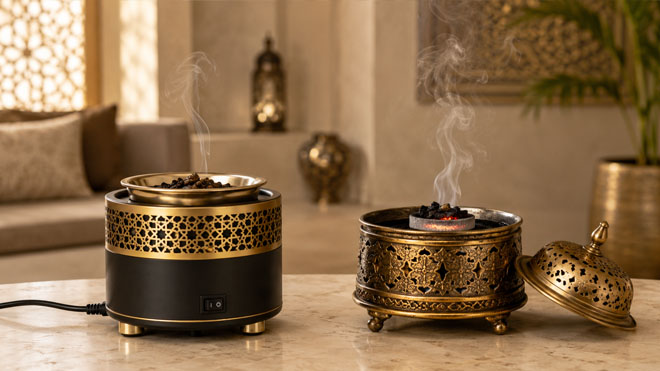
Choosing between an electric and charcoal incense burner depends on the type of incense you use, the fragrance experience you prefer, and where the burner will be operated. Both options can release the aroma of bakhoor, oud, resin, and other incense materials, but they work in different ways.
A charcoal burner provides a traditional, intense fragrance experience, while an electric incense burner offers greater convenience and more controlled heating. Understanding these differences can help individual users, retailers, and wholesale buyers select the right product.
What Is an Electric Incense Burner?
An electric incense burner uses a powered heating element instead of burning charcoal. Depending on the design, incense is placed inside a metal cup or on a heating plate. Once switched on, the burner gradually heats the material and releases its aroma.
Electric burners may feature:
- A power switch
- Removable incense tray
- Temperature adjustment
- Timer function
- Heat-resistant internal components
- Rechargeable or plug-in operation
- Decorative metal housing
Their convenience makes them suitable for homes, offices, hotels, reception areas, and modern retail collections.
What Is a Charcoal Incense Burner?
A charcoal incense burner uses a lit charcoal disc or incense charcoal to heat bakhoor, oud chips, resin, or aromatic blends. The charcoal is normally placed in a heat-resistant inner bowl, often with sand, foil, or another protective layer depending on the burner design and operating instructions.
Once the charcoal reaches the correct temperature, a small amount of incense is placed over it. This produces a stronger aroma and visible smoke associated with traditional incense rituals.
Charcoal burners are particularly common in Middle Eastern homes, hospitality settings, religious environments, and cultural ceremonies.
Electric vs Charcoal Incense Burners: Key Differences
| Feature | Electric Incense Burner | Charcoal Incense Burner |
|---|---|---|
| Heat source | Electrical heating element | Burning charcoal |
| Setup | Switch on and add incense | Light and prepare charcoal first |
| Fragrance intensity | Generally gentle and controlled | Usually stronger and smokier |
| Heating control | More consistent; adjustable on some models | Depends on charcoal condition |
| Smoke level | Usually lower | Usually higher |
| Portability | Requires power unless rechargeable | Can be used without electricity |
| Cleaning | Heating tray requires routine cleaning | Ash and residue must be removed |
| User experience | Convenient and modern | Traditional and ceremonial |
| Ventilation | Recommended | Essential |
| Best suited to | Regular indoor use | Traditional bakhoor experiences |
Fragrance Intensity
Charcoal burners usually generate a more intense fragrance because the incense reaches a higher temperature. This can release aroma quickly and fill a larger space, but it may also produce more smoke and cause delicate incense materials to burn faster.
An electric burner heats incense more gradually. The fragrance may be softer, cleaner, and easier to manage in smaller rooms. Some buyers prefer this method because the scent develops without the strong initial smoke created by charcoal.
The better option depends on the intended experience. For a bold, traditional bakhoor ceremony, charcoal may be preferred. For daily use in a bedroom, office, or reception area, an electric model may be more practical.
Convenience and Ease of Use
Electric incense burners are generally easier for beginners. Users can place incense in the designated tray, switch on the device, and allow it to heat. Models with temperature settings provide additional control over fragrance intensity.
Charcoal requires more preparation. The charcoal must be lit safely and allowed to heat before incense is added. Users also need appropriate tools, a fire-resistant surface, and sufficient ventilation.
For customers who value quick operation and minimal preparation, an electric burner is often the more convenient choice. For those who enjoy the complete traditional process, preparing charcoal may be an important part of the experience.
Safety Considerations
Both types must be used responsibly, but their risks are different.
A charcoal burner contains an open heat source and can reach high temperatures. It may produce smoke, ash, sparks, and carbon monoxide. It should only be used in a well-ventilated area, on a stable heat-resistant surface, and away from curtains, paper, children, and pets. Burning charcoal should never be left unattended.
Electric burners eliminate the need to light charcoal, but they still generate heat. The heating element, tray, and metal body may become hot. Users should follow the manufacturer’s operating instructions, avoid touching heated components, and disconnect the burner after use.
Retailers and importers should check whether the product design includes appropriate insulation, stable supporting feet, secure internal components, and instructions that match its intended market.
Cleaning and Maintenance
Charcoal burners normally require more frequent cleaning because ash and burnt incense residue accumulate inside the bowl. The burner must cool completely before ash is removed. Removable inner cups can make this process easier.
Electric burners produce less ash, but oils and resin may remain on the heating tray. These deposits should be removed according to the manufacturer’s instructions. Abrasive tools should be avoided on painted, plated, or polished surfaces.
For either type, removable trays and accessible internal structures improve everyday maintenance.
Design and Decorative Options
Both electric and charcoal incense burners are available in traditional Arabic, contemporary, minimalist, and luxury styles.
Metal charcoal burners often feature:
- Geometric ventilation patterns
- Decorative lids
- Pedestal bases
- Carrying handles
- Gold, bronze, black, or silver finishes
- Removable charcoal holders
Electric designs can incorporate similar exterior styling while housing electrical components inside. However, their internal structure must also account for wiring, switches, ventilation, insulation, and access to the heating tray.
For custom projects, the chosen heating method should be confirmed before finalizing the exterior design.
Which Burner Is Better for Home Use?
An electric incense burner may be more suitable for frequent indoor use because it is convenient and typically produces less smoke. It can be a practical choice for apartments, offices, bedrooms, and spaces where lighting charcoal would be inconvenient.
A charcoal burner may be better for users who value a traditional fragrance ritual and want a powerful scent for gatherings or larger spaces. Proper ventilation remains essential.
Homes can also use both: an electric burner for regular fragrance and a charcoal burner for special occasions.
Which Type Should Retailers Choose?
Retailers should base their product selection on customer habits rather than offering only one heating method.
Electric burners may appeal to:
- First-time incense users
- Younger consumers
- Office and hotel customers
- Buyers seeking convenient operation
- Modern home-fragrance brands
Charcoal burners may appeal to:
- Traditional bakhoor users
- Middle Eastern households
- Gift and cultural-product retailers
- Customers seeking stronger fragrance
- Buyers who prefer cordless operation
Offering both categories allows distributors to serve different price points, lifestyles, and fragrance preferences.
Customizing Electric and Charcoal Incense Burners
Customization can include the burner’s shape, decorative pattern, color, surface finish, logo, inner cup, and packaging. Charcoal burner development usually focuses on heat resistance, ventilation, stability, and ash management.
Electric incense burner development also requires careful consideration of the heating system, internal insulation, electrical components, plug type, operating voltage, and applicable market requirements.
Dongguan Huadi Hardware Products Co., Ltd. supports custom metal incense burner projects based on buyer drawings, samples, design concepts, and market needs. A complete project brief helps the manufacturer evaluate materials, structure, finishing, packaging, and production feasibility.
Final Recommendation
Choose an electric incense burner if you prioritize convenience, controlled heating, lower smoke levels, and regular indoor use.
Choose a charcoal incense burner if you prefer strong fragrance, traditional preparation, portability, and the ceremonial experience of burning bakhoor over charcoal.
Neither option is universally better. The right choice depends on the incense material, operating environment, customer expectations, and desired fragrance intensity.
Frequently Asked Questions
Can bakhoor be used in an electric incense burner?
Yes, many electric burners are designed to heat bakhoor. Users should follow the product instructions and avoid overfilling the heating tray.
Does an electric incense burner produce smoke?
It can produce light smoke depending on the temperature and incense material, but it generally creates less smoke than burning incense over charcoal.
Does charcoal make bakhoor smell stronger?
Charcoal usually heats bakhoor more intensely, producing a stronger aroma and more visible smoke. Excessive heat may also cause the fragrance material to burn quickly.
Can charcoal incense burners be used indoors?
They should only be used in a sufficiently ventilated area and on a stable, heat-resistant surface. Burning charcoal must never be used in an enclosed or poorly ventilated space.
Which burner is easier to clean?
Electric burners generally produce less ash, although resin can remain on the heating tray. Charcoal burners require regular removal of ash and burnt incense residue.
Can both types be customized for wholesale orders?
Yes. Depending on the project, buyers can customize the shape, metal pattern, color, finish, logo, inner components, and retail packaging.