Middle Eastern Incense Burner Trends for Retailers and Distributors

2024-11-04
The Middle Eastern incense burner market combines long-standing fragrance traditions with changing consumer expectations. Traditional charcoal burners remain important for burning bakhoor, oud chips, and aromatic resins, while electric models are becoming increasingly relevant for convenient daily use.
For retailers and distributors, choosing the right products requires more than following visual trends. Burner type, material, finish, packaging, target price, and local fragrance habits all influence whether a collection will perform well.
This guide examines the key Middle Eastern incense burner trends and explains how wholesale buyers can build a more focused product range.
Traditional Designs Remain Commercially Important
Traditional incense burners continue to attract buyers because they are closely connected with home fragrance, hospitality, religious occasions, and family gatherings.
Common design elements include:
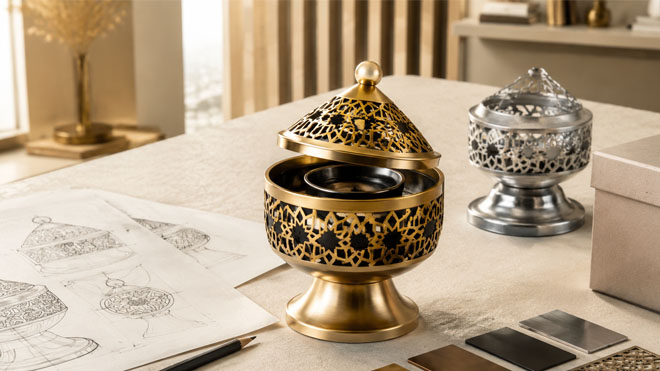
- Domed or pointed lids
- Pedestal-style bases
- Geometric cutout patterns
- Gold, brass, bronze, and copper finishes
- Decorative handles
- Removable charcoal containers
- Arabic architectural influences
Traditional styling does not necessarily mean reproducing old designs. Many successful products simplify familiar cultural elements, giving the burner a cleaner shape while retaining its recognizable Middle Eastern character.
Retailers should evaluate whether a design feels authentic without becoming overly ornate or difficult to clean.
Modern Minimalist Burners Are Expanding the Market
Minimalist incense burners can reach consumers who enjoy bakhoor but prefer contemporary home décor. These products often use simpler shapes, fewer decorative openings, and restrained color combinations.
Popular characteristics include:
- Cylindrical or rectangular bodies
- Matte black and gold combinations
- Neutral beige or white finishes
- Clean ventilation patterns
- Hidden joints and internal components
- Compact dimensions
- Smooth, easy-to-clean surfaces
This trend is particularly relevant to lifestyle stores, online retailers, apartment users, and younger buyers. A minimalist collection can complement rather than replace traditional models.
Distributors can serve a broader market by offering both decorative heritage-inspired products and simpler contemporary options.
Electric Incense Burners Support Convenient Daily Use
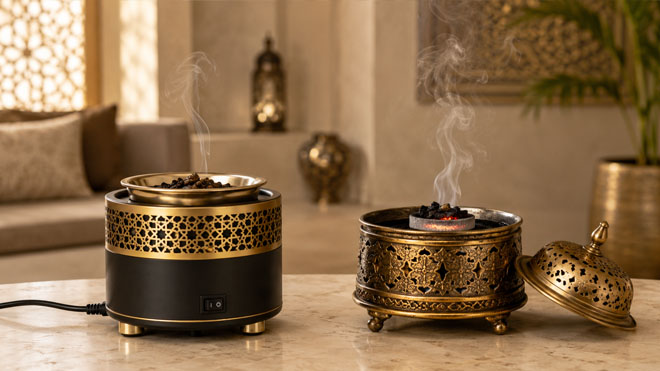
Electric incense burners are becoming an important category for customers who want fragrance without preparing charcoal. They are suitable for regular indoor use in homes, offices, hotel rooms, reception areas, and other spaces where traditional burning may be inconvenient.
Depending on the design, an electric burner may include:
- A removable heating tray
- Power switch
- Adjustable heat settings
- Timer function
- Plug-in or rechargeable operation
- Heat-resistant internal components
Retailers should not select electric burners only by appearance. Voltage, plug type, heating performance, wiring, insulation, user instructions, and market requirements must also be considered.
When importing electric incense burners, buyers should clearly identify the intended sales country before confirming product specifications.
Charcoal Burners Continue to Serve Traditional Users
Despite the growth of electric models, charcoal incense burners remain essential for many Middle Eastern consumers. Charcoal creates the stronger aroma and visible smoke associated with traditional bakhoor use.
Good charcoal burner design should consider:
- Heat-resistant inner containers
- Stable supporting bases
- Appropriate ventilation
- Accessible ash removal
- Secure lids and handles
- Separation between hot internal parts and exterior surfaces
Charcoal burners are often selected for family gatherings, hospitality, special occasions, and ceremonial fragrance use. Retailers serving experienced bakhoor users should maintain a strong selection in this category.
Clear safety and ventilation instructions should accompany products intended for charcoal use.
Gold and Black Remain Strong Color Choices
Gold continues to be one of the most recognizable colors in Middle Eastern incense burner collections. It communicates warmth, ceremony, and premium value and works well with traditional decorative patterns.
Matte black has also become important, particularly when combined with gold accents. The contrast creates a more contemporary appearance while preserving a luxurious identity.
Other commercially useful finishes include:
- Antique brass
- Bronze
- Copper
- Polished silver
- Brushed metal
- Cream and gold
- White and champagne gold
- Dark green with metallic details
Retailers should avoid building a collection from too many unrelated colors. A coordinated palette makes store displays and product photography look more consistent.
For initial orders, several proven finishes may be safer than purchasing large quantities in many untested colors.
Decorative Cutouts Are Becoming More Refined
Laser-cut and stamped patterns are widely used to create visual interest, provide ventilation, and produce attractive light and shadow effects.
Current designs frequently combine:
- Arabic geometric patterns
- Repeating star motifs
- Floral details
- Arch-inspired openings
- Simplified latticework
- Modern linear perforations
The pattern must remain practical. Extremely fine openings may be difficult to manufacture consistently, collect residue, or reduce the strength of thin metal sections.
Retailers and distributors should review physical samples rather than approving decorative patterns only from digital renderings.
Compact Burners Suit Online Retail
Compact incense burners are well suited to e-commerce because they are easier to store, photograph, pack, and ship. They may also appeal to customers with smaller living spaces.
However, reducing size should not compromise stability or safe heat management. A narrow base, weak lid, or undersized charcoal container can reduce usability.
Wholesale buyers should compare:
- Product dimensions
- Burner weight
- Base width
- Inner cup capacity
- Carton dimensions
- Units per shipping carton
- Packaging protection
A slightly higher product cost may be justified if the design reduces damage and uses shipping space efficiently.
Gift-Ready Packaging Adds Retail Value
Incense burners are frequently purchased as gifts for Ramadan, Eid, weddings, housewarmings, and family occasions. Packaging therefore plays a more important role than simple transportation protection.
Gift-oriented packaging may include:
- Rigid presentation boxes
- Printed color boxes
- Foam or molded inserts
- Metallic design details
- Product care cards
- Coordinated accessory compartments
- Private-label branding
The box should secure the burner, lid, inner cup, and any included tools separately. Metal surfaces may require protective bags or soft wrapping to prevent scratching during transit.
A well-designed box can help retailers position the product at a higher level without changing the burner itself.
Coordinated Collections Improve Merchandising
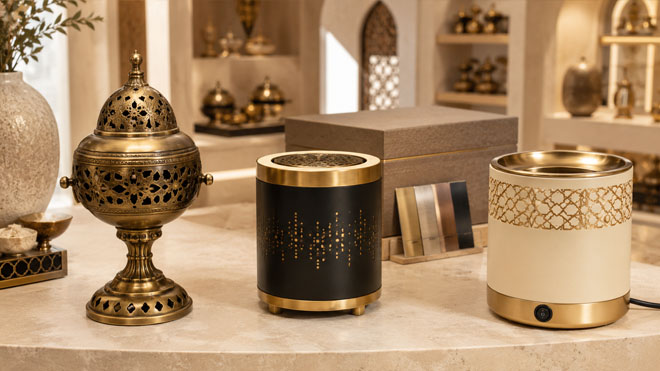
Retailers are increasingly interested in product families rather than isolated incense burner designs. A coordinated collection may use the same pattern, finish, or shape across several sizes and product types.
A collection could include:
- Small personal incense burner
- Standard household burner
- Large decorative burner
- Matching incense storage container
- Charcoal holder
- Serving tray
- Gift set packaging
This approach gives distributors more flexibility when building catalogues and allows retailers to create cohesive displays. It can also support different price points while maintaining a consistent brand identity.
The collection should still be planned carefully. Adding accessories that customers do not need can increase inventory complexity without improving sales.
Private-Label Customization Is Growing
Private-label buyers want products that feel exclusive to their market rather than identical to widely available wholesale items.
Customization can include:
- Exclusive colors
- Modified decorative patterns
- Custom dimensions
- Branded metal tags
- Laser-engraved logos
- Printed retail packaging
- Instruction cards
- Coordinated product sets
The most effective customization does not always require developing an entirely new structure. Updating the finish, pattern, branding, and packaging of an existing design may reduce development time and tooling costs.
Retailers should discuss order quantity, target price, design ownership, sampling, and packaging requirements before starting a custom project.
Buyers Are Paying More Attention to Product Quality
A visually attractive incense burner can still lead to complaints if the lid does not fit, the base is unstable, or the finish scratches easily.
Before confirming a wholesale order, inspect:
- Dimensions and proportions
- Product stability
- Metal edges and cutouts
- Welds and assembly joints
- Lid alignment
- Removable inner parts
- Surface color consistency
- Plating or coating adhesion
- Packaging fit
- Carton protection
For charcoal products, the buyer should also evaluate the heat-related design and intended operating method. Electric models require additional review of their electrical configuration and target-market requirements.
An approved sample should be retained as the reference for mass-production inspection.
How to Build the Right Wholesale Collection
A balanced collection should reflect several customer groups rather than following one design trend.
| Customer Segment | Recommended Product Direction |
|---|---|
| Traditional bakhoor users | Decorative charcoal burners with removable inner cups |
| Modern home users | Minimalist electric or compact metal burners |
| Gift buyers | Premium finishes with gift-ready packaging |
| Online customers | Compact, durable, efficiently packed designs |
| Hospitality buyers | Stable burners suitable for repeated use |
| Private-label brands | Coordinated colors, patterns, logos, and packaging |
Begin with a limited number of clearly differentiated models. Sales data and customer feedback can then guide color extensions, new sizes, and custom collections.
Working with an Incense Burner Manufacturer
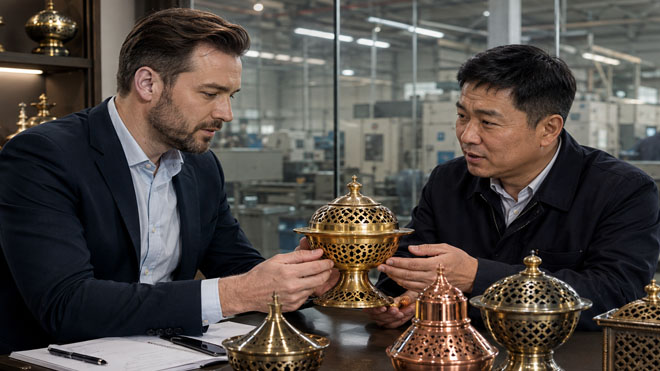
An experienced manufacturer can help evaluate whether a design is suitable for stamping, laser cutting, forming, welding, polishing, coating, and assembly.
Dongguan Huadi Hardware Products Co., Ltd. supports custom metal incense burner development for retailers, importers, distributors, and private-label brands. Projects can begin with drawings, reference samples, design ideas, or specific market requirements.
Providing the intended burner type, destination market, dimensions, finish, order quantity, branding, and packaging expectations allows the manufacturer to assess the project more accurately.
Conclusion
Middle Eastern incense burner trends are moving in several directions at the same time. Traditional charcoal burners remain culturally and commercially important, while electric products, minimalist styling, coordinated collections, and gift-ready packaging are creating new retail opportunities.
Retailers and distributors should choose products based on customer habits, safety, product quality, shipping efficiency, and positioning—not appearance alone.
A focused collection combining traditional character with practical modern features can serve a wider range of buyers without creating unnecessary inventory complexity.
Frequently Asked Questions
Which incense burner styles are popular in Middle Eastern markets?
Traditional gold, brass, and bronze burners with geometric patterns remain popular. Matte black combinations, minimalist forms, and modern electric burners are also expanding the market.
Should retailers stock electric or charcoal burners?
Stocking both can serve different customer groups. Electric burners suit buyers seeking convenience, while charcoal burners appeal to customers who prefer traditional bakhoor preparation and stronger fragrance.
What finishes work well for wholesale incense burners?
Gold, antique brass, bronze, matte black, silver, and black-and-gold combinations are widely adaptable. The best selection depends on the retailer’s audience and price positioning.
Are gift boxes important for incense burner sales?
Yes. Incense burners are frequently purchased for holidays, weddings, housewarmings, and other occasions. Protective, gift-ready packaging can improve presentation and perceived value.
Can retailers develop exclusive incense burner collections?
Yes. Manufacturers may customize the color, finish, pattern, dimensions, logo, accessories, and packaging. Some projects can begin from an existing structure to reduce development complexity.
What should distributors inspect before placing a bulk order?
Check product stability, edges, pattern quality, surface finishing, lid fit, removable components, packaging protection, and conformity with the approved sample.