Incense Burner Quality Inspection Checklist for Wholesale Buyers

2024-11-04
| Inspection Area | Main Points to Verify |
|---|---|
| Product identity | Correct model, size, color and finish |
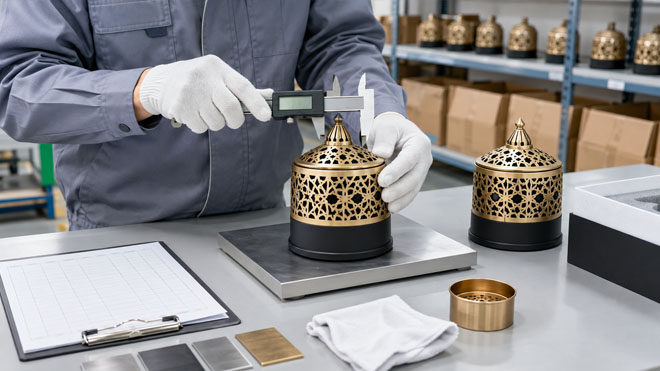
| Dimensions | Measurements and weight match approved specification |
| Stability | Flat base, balanced body and secure feet |
| Assembly | Lid, handle, tray and fasteners fit correctly |
| Metalwork | No sharp edges, burrs, cracks or distorted cutouts |
| Welding | Complete, aligned and visually acceptable joints |
| Surface finish | Consistent color without scratches, peeling or stains |
| Function | Intended components operate according to instructions |
| Branding | Correct logo, label, artwork and barcode |
| Packaging | Secure internal fit and adequate transport protection |
| Quantity | Correct totals, ratios, accessories and carton packing |
Inspection requirements should be agreed with the manufacturer before production. Buyers should also define how defects will be classified and what action is required if the inspection result is unacceptable.
Distinguish Critical, Major, and Minor Defects
A practical inspection plan normally classifies defects according to their effect on safety, function, saleability, and appearance.
- Critical defects: Conditions that may create an unacceptable safety risk or violate a mandatory requirement.
- Major defects: Problems that affect function, durability, assembly, branding, or normal saleability.
- Minor defects: Limited cosmetic variations that do not significantly affect use or retail acceptance.
The classification should reflect the specific product. For example, a slightly uneven decorative line may be cosmetic, while an unstable base or exposed electrical connection requires much more serious attention.
The buyer and supplier should agree on defect definitions and acceptance criteria rather than deciding them after inspection.
Complete Pre-Shipment Documentation
After inspection, the buyer should receive a clear report containing:
- Order and product details
- Available quantity
- Sampling information
- Inspection results
- Measurement records
- Functional test results
- Defect photographs
- Packaging photographs
- Carton information
- Final conclusion
If corrective work is required, request evidence of rework and arrange reinspection when appropriate. Shipment approval should be based on the agreed process, not only on a supplier’s verbal confirmation.
Conclusion
An effective incense burner quality inspection covers far more than product appearance. Buyers should verify dimensions, stability, metalwork, assembly, finishing, function, branding, packaging, and order accuracy against an approved specification.
Dongguan Huadi Hardware Products Co., Ltd. supports custom metal incense burner projects from design review and sampling to production, inspection, and export packaging. Establishing clear standards early helps both the buyer and manufacturer maintain consistent expectations throughout the order.
Frequently Asked Questions
When should the quality requirements be confirmed?
They should be confirmed before mass production begins, ideally during drawing and sample approval. This gives the manufacturer time to align materials, processes, finishing, and packaging with the buyer’s expectations.
How many incense burners should be inspected?
The appropriate sample size depends on the order quantity, inspection plan, product risk, and buyer requirements. Wholesale buyers can use an agreed statistical sampling method or request a higher inspection level for critical characteristics.
Is an approved sample enough for quality control?
An approved sample is important, but it should be supported by drawings, specifications, artwork, packaging requirements, and defined acceptance criteria. The sample alone may not show internal materials or permitted tolerances.
What are common defects in metal incense burners?
Common issues include unstable bases, loose lids, sharp edges, incomplete patterns, uneven finishes, scratches, weak joints, incorrect logos, and insufficient packaging protection.
Do electric incense burners require additional inspection?
Yes. Electric models need functional and electrical checks appropriate to their design and intended market. Factory inspection should not be treated as a replacement for qualified compliance testing.
Should packaging be included in the final inspection?
Yes. Poor packaging can damage products that passed production inspection. The inspector should verify internal protection, retail boxes, master cartons, packing quantities, and shipping marks.