Incense Burner Finishes and Coatings: A Guide for Wholesale Buyers

2024-11-04
Incense burner finishes and coatings affect far more than color. They influence the product’s appearance, surface protection, cleaning requirements, manufacturing cost, and suitability for different retail markets.
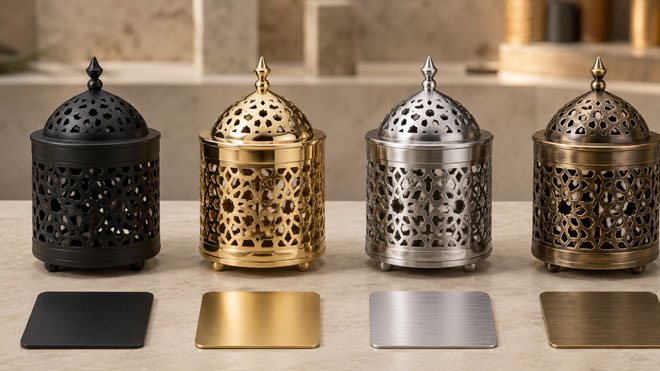
Gold plating may create a luxurious look for gift collections, while matte powder coating can support a more contemporary style. Antique brass finishes often suit traditional Middle Eastern products, but polished silver or brushed metal may work better for modern interiors.
For importers, retailers, and private-label brands, the right finish should match the burner’s material, structure, intended use, packaging, and target price. This guide compares common options and explains what buyers should confirm before mass production.
Why the Surface Finish Matters
The finish is often the first feature a customer notices. It can make two incense burners manufactured from the same structure appear completely different.
A suitable surface treatment may provide:
- A specific color and texture
- Improved resistance to corrosion
- Protection against handling marks
- A consistent appearance across components
- Easier surface cleaning
- Better compatibility with branding
- A premium or traditional visual identity
A decorative finish cannot correct poor metal preparation. Scratches, welding marks, dents, oil, and uneven surfaces may remain visible after coating or plating. Proper cleaning, deburring, grinding, and polishing should therefore take place before the final finish is applied.
Powder Coating
Powder coating applies dry powder to a prepared metal surface and then cures it with heat. It is widely used for incense burners requiring a durable colored exterior.
Common colors include:
- Matte black
- Glossy black
- White
- Cream
- Dark green
- Burgundy
- Custom colors
Powder coating can produce an even finish and works well with modern, minimalist burner designs. It is also useful when a collection requires several coordinated colors.
However, coating thickness must be controlled around joints, lid edges, ventilation openings, and tightly fitted components. Excessive buildup can affect assembly or make removable parts difficult to operate.
For products exposed to high temperatures, the coating system must be selected according to the intended operating conditions. Buyers should not assume that every decorative powder coating is suitable for heat-affected areas.
Spray Painting
Liquid spray painting provides broad flexibility in color, gloss, metallic appearance, and decorative effects. It may be suitable for complex shapes or projects requiring a particular visual style.
Possible effects include:
- Matte colors
- High-gloss colors
- Metallic gold or silver
- Pearl finishes
- Gradient effects
- Textured coatings
Spray painting can produce an attractive surface, but preparation and curing are important. Buyers should check for paint runs, dust particles, uneven coverage, color variation, and weak adhesion.
Painted components should be packed carefully because direct contact between metal parts may cause scratching during transportation.
Electroplating
Electroplating deposits a thin metallic layer onto a prepared surface. It is commonly used to achieve decorative gold, silver, nickel, chrome, copper, or other metallic appearances.
Plated incense burners can support premium and traditional product positioning. They may offer brighter reflections and a more authentic metallic appearance than ordinary paint.
The final result depends on:
- Base material
- Surface polishing
- Plating process
- Layer structure
- Part geometry
- Handling and packaging
- Required color reference
Deep recesses and complex cutouts may plate differently from flat, accessible surfaces. Buyers should inspect the complete burner rather than approving a small flat color sample alone.
Plating requirements should be agreed with the manufacturer, including appearance, testing expectations, intended environment, and acceptable color variation.
Polished Metal Finishes
Polishing smooths the metal surface and creates a reflective appearance. It is commonly associated with stainless steel, brass, and selected metal components.
Polished incense burners can look clean and premium, but reflective surfaces make certain defects easier to see. Scratches, dents, welding marks, fingerprints, and uneven polishing may be more noticeable than on matte finishes.
A polished product should be inspected under consistent lighting. Protective bags, tissue, foam, or surface films may be needed to reduce rubbing during shipment.
Regular cleaning may also be necessary because glossy surfaces can show fingerprints and residue more easily.
Brushed Metal Finishes
A brushed finish creates fine, consistent lines across the metal surface. Compared with mirror polishing, it provides a softer and more contemporary appearance.
Brushed finishes are often used for:
- Stainless steel burners
- Modern electric incense burners
- Decorative bands
- Lids and trays
- Premium minimalist collections
The direction and consistency of the brushing should be controlled. Components brushed in different directions can look mismatched after assembly.
Buyers should also confirm whether the surface will remain as exposed metal or receive an additional protective treatment.
Antique Brass and Bronze Effects
Antique finishes are widely used for traditional Arabic and Middle Eastern incense burners. They add visual depth to decorative patterns and help recessed areas appear darker.
These effects can be created through combinations of coloring, plating, brushing, polishing, or protective coating. The exact process depends on the base material and desired appearance.
Antique finishes naturally contain tonal variation, but this does not mean every variation should be accepted. The buyer and manufacturer should agree on:
- Overall color range
- Darkness of recessed areas
- Highlighted raised surfaces
- Acceptable variation between products
- Gloss level
- Protective topcoat
A physical approved sample is especially important because terms such as “antique gold” or “old bronze” can describe many different appearances.
Matte Black and Gold Combinations
Black-and-gold incense burners are popular because they combine a modern base color with a premium metallic accent. This combination works for both minimalist and ornate designs.
The black section may be powder-coated or painted, while the gold component may be plated, polished, or coated. When different processes are used on one product, buyers should check:
- Color harmony
- Clean separation between finishes
- Consistent gloss
- Alignment after assembly
- Protection against scratching
- Matching across production batches
Separately finishing components before assembly can create cleaner boundaries, but the assembly process must not damage the completed surfaces.
Heat Exposure Must Be Considered
Incense burners can contain charcoal, hot resin, or an electric heating element. The highest-temperature areas may require different materials or surface treatments from the decorative outer shell.
Buyers should identify:
- The expected heat source
- Location of the charcoal or heating tray
- Distance between the inner cup and outer body
- Areas touched by the user
- Ventilation structure
- Cleaning method
- Whether discoloration is acceptable
The external decorative finish should not be assumed to perform the same way as a specialized heat-resistant coating. Product development and functional testing should reflect the actual intended use.
Comparing Common Finish Options
| Finish | Typical Appearance | Suitable Product Direction | Main Inspection Focus |
|---|---|---|---|
| Powder coating | Matte, textured or glossy color | Modern and minimalist burners | Coverage, adhesion and edge buildup |
| Spray painting | Wide range of colors and effects | Decorative and custom collections | Dust, runs, color consistency and scratches |
| Electroplating | Bright metallic appearance | Premium and traditional burners | Color, coverage, discoloration and surface preparation |
| Polishing | Smooth and reflective metal | Luxury or clean modern products | Scratches, dents, fingerprints and polishing consistency |
| Brushing | Fine linear metal texture | Contemporary burners | Direction, uniformity and component matching |
| Antique finish | Aged brass or bronze effect | Traditional Middle Eastern designs | Tonal range, highlights and batch consistency |
The best option cannot be selected by appearance alone. It should also match the product material, quantity, target cost, manufacturing process, and operating environment.
How to Approve a Finish Sample
Before mass production, buyers should approve the finish on an actual product or representative component rather than relying only on a digital color image.
The approval process should cover:
- Base material
- Surface preparation
- Finish type
- Color and tone
- Gloss level
- Texture
- Pattern coverage
- Acceptable variation
- Logo appearance
- Packaging protection
Photographs can support communication, but lighting and screen settings can change how metallic colors appear. The retained physical sample should become the main visual reference for production inspection.
Inspecting Finished Incense Burners
During production or pre-shipment inspection, examine samples under consistent lighting and compare them with the approved reference.
Look for:
- Uneven color
- Exposed base metal
- Peeling or flaking
- Scratches
- Dents
- Paint runs
- Dust beneath the coating
- Plating stains
- Inconsistent gloss
- Fingerprints
- Surface damage from assembly
- Color differences between components
Inspection criteria should consider viewing distance and product positioning. A small mark hidden inside the base may not have the same impact as a visible scratch on the front surface.
Packaging Finished Products
Surface protection continues after production. A correctly finished incense burner can still arrive damaged if the lid, body, tray, and accessories rub against each other during transit.
Packaging may include:
- Individual protective bags
- Soft tissue or non-abrasive wrapping
- Separate compartments for removable parts
- Foam or molded inserts
- Dividers between metal components
- Protective retail boxes
- Strong export cartons
Packaging should be tested with the actual finished product. Materials that are suitable for a matte coating may leave marks on a highly polished or plated surface.
Choosing a Finish for a Custom Collection
When planning a wholesale collection, begin with the intended customer and retail setting.
Traditional gift collections may use antique brass, bronze, or bright gold. Contemporary home-fragrance brands may prefer matte black, cream, brushed metal, or restrained gold accents. Hospitality products may prioritize surfaces that are practical to handle and clean.
Dongguan Huadi Hardware Products Co., Ltd. supports custom metal incense burner projects involving material selection, decorative patterns, surface finishing, logo application, sampling, production, and packaging. Providing physical color references, target-market information, and intended use can help the manufacturer recommend a more appropriate finishing process.
Conclusion
Incense burner finishes and coatings influence appearance, durability, handling, cleaning, and customer perception. Powder coating and spray painting provide flexible color options, while plating, polishing, brushing, and antique effects support different traditional and premium designs.
Wholesale buyers should approve a physical sample, define acceptable variation, inspect the finish under consistent lighting, and ensure the packaging prevents surface damage. A carefully selected and controlled finish can make an incense burner collection more consistent, distinctive, and suitable for its target market.
Frequently Asked Questions
What is the best finish for a metal incense burner?
There is no single best finish. The appropriate choice depends on the base metal, burner type, expected heat exposure, desired appearance, target price, and retail market.
Is powder coating suitable for incense burners?
It can be suitable for selected exterior parts when the coating system matches the material and intended conditions. Heat-affected areas require separate evaluation and appropriate testing.
Why do gold finishes look different in photographs?
Metallic surfaces reflect surrounding light and colors. Camera settings, lighting direction, and screen calibration can make the same gold finish appear lighter, darker, warmer, or cooler.
Can several finishes be combined on one incense burner?
Yes. Black-and-gold, cream-and-gold, brushed-and-polished, and antique-highlight combinations are common. The manufacturer must control masking, component fit, and assembly to keep finish boundaries clean.
How can buyers reduce scratches during shipping?
Use protective bags, soft wrapping, fitted inserts, and separate compartments for lids and accessories. The final packaging should be tested with the actual finished product.
Should buyers approve finishes from digital images?
Digital images can be used for initial discussion, but a physical sample is more reliable. The approved sample should be retained as the reference for mass-production inspection.
PREV
NEXT